
A lot of leaders are asking the wrong question about AI. They are asking whether AI is going to replace people, as if the whole issue can be reduced to a simple yes or no. That question matters, but it is not big enough. AI will replace some tasks, reduce the need for some roles, and change the value of certain skills, but it will not remove the need for leadership.
Leadership is not just labour. It is not just administration, reporting, rostering, or passing information from one level of the business to another. Leadership is influence. It is direction. It is the ability to help people move through uncertainty without letting fear make every decision for them. That is why AI will not remove the need for leaders, but it will make weak leadership much harder to hide.

What Does AI Actually Mean for Leadership Today?
AI is already changing the way work gets done. Work that once took four hours can now take two. Research can be accelerated, drafts can be produced faster, systems can be tested more quickly, and repetitive tasks can be reduced or automated. That does not mean every person becomes useless. It means the value of a person starts to shift.
- The person who only performs a repeatable task is more exposed than the person who can think, adapt, judge, check quality, and solve problems.
- The person who refuses to learn will become easier to replace.
- The person who learns how to use AI well becomes more valuable.
That is the line leaders need to understand, because your job is not to panic your team. Your job is to prepare them.
You Do Not Need to Be the Expert in Everything
Authentic leadership through this shift does not require you to become a technical expert. That is one of the traps leaders fall into. They think they need to know every tool, every function, every technical detail, and every new development before they can start guiding their people. That is not leadership. That is hesitation dressed up as responsibility.
A leader does not need to know every button. A leader needs to understand the direction. You need to know:
- What AI can do and what it cannot do
- Where the risks are and where the opportunities are
- How your team can use it without becoming careless or overly dependent on it
That is enough to begin. You can bring in training, encourage experimentation, set standards, and make it clear that learning AI is now part of staying useful.
Your Team Needs Permission to Learn

A lot of people are not resisting AI because they are stubborn. They are resisting it because of a genuine fear of change. They are afraid of losing their jobs, looking incompetent, being replaced, or helping the business build the very system that may one day reduce their role. That fear is real, and pretending it does not exist is poor leadership.
This is where authentic leadership requires honesty without brutality. Yes, AI will change jobs. Yes, some roles will disappear. Yes, some people will need to reskill. But hiding from that does not protect anyone. It only makes people weaker when the change finally reaches them. A leader’s responsibility is to help people become harder to replace, not to comfort them while their relevance quietly disappears.
That means your team needs permission to embrace change. They need:
- Time to practise and room to make mistakes
- Clear examples of how AI can help them do better work, not just faster work
- Guidance on how to ask better questions, check the output, and challenge weak answers
- Reassurance that their own judgement still matters
AI should not switch off thinking. It should force better thinking.
AI Should Raise the Standard, Not Lower It
There is a lazy argument that AI destroys human skill. Sometimes it will, especially when people use it badly. If someone uses AI to avoid thinking, they will produce shallow work with polished edges. If they use it to replace judgement, they will create mistakes with confidence. That is not progress. That is just poor work moving faster.
Used properly, AI does something different. It raises the standard. The quality of the output still depends on the quality of the person guiding it:
- A weak thinker using AI will still produce weak work.
- A skilled person using AI can test ideas, find gaps, improve structure, compare options, and reach a stronger result in less time.
The tool does not remove the need for intelligence. It increases the penalty for not having any.
Leaders Have to Control the Message
Leading through change also means being careful with the message you send. The framing matters enormously:
| If you frame AI as… | Your team will… |
|---|---|
| A threat | Hide from it |
| A toy | Misuse it |
| A magic answer | Stop checking the work |
| A tool for capable people | Use it with care and confidence |
The right message is much more grounded: this is a tool that can make capable people more capable, but it will not save lazy thinking. Authentic leadership means setting that standard before bad habits take over.
Your team needs to know:
- When AI can be used
- What information must not be entered into it
- What work needs to be reviewed and checked
- Where human judgement must remain firmly in control
Without that standard, AI becomes another source of noise. With that standard, it becomes a genuine advantage.
What Happens When Some People Simply Refuse to Move?
Some people will not move. That is the part many leaders avoid. You can encourage people, train them, support them, and give them every reasonable opportunity to grow, but you cannot force someone to take responsibility for their own future. Some people will argue, delay, complain, and wait for the old way of working to return. It will not.
At some point, authentic leadership requires a difficult conversation. That conversation does not need to be cruel, but it does need to be clear. You may need to say, “I will support you, but this is where the business is going. If you do not want to move in that direction, we need to talk about whether this is still the right place for you.” That is not harsh leadership. That is responsible leadership.
One person refusing to embrace change can slow down the whole team. If everyone else is trying to adapt and one person keeps pulling backwards, the leader has to deal with it. Avoiding that conversation is not kindness. It is weakness. You are not protecting the person, and you are not protecting the team. You are simply delaying the pressure until it becomes harder to manage.
Are Leaders Themselves at Risk of Being Left Behind?
The same standard applies to the leader. Leading through change is not just something you ask of your team. It applies to you too. If you are not learning, your relevance is already shrinking. If you are not looking for ways AI can improve your team, another leader will. If your business keeps doing everything the old way while another business becomes faster, sharper, and more productive, the outcome will not be difficult to predict.
AI will not just expose weak employees. It will expose weak leaders. It will expose the leaders who:
- Talk about change but avoid it
- Hide behind meetings instead of building capability
- Want loyalty from their people but will not prepare those people for what is coming
You cannot lead people into a future you refuse to understand.
What Is the Real Leadership Question in the Age of AI?
The real question is not whether AI is good or bad. The real question is whether you are going to practise authentic leadership and guide your people through it properly. You can resist it, complain about it, and wait until the decision is made for you. Or you can learn enough to guide your team, protect their future value, and help them embrace change before it overwhelms them.
This is not about chasing every new trend. It is about responsibility. Your people still need direction, judgement, standards, and someone who can help them face change without falling apart or falling behind. Leading through change is not a one-off event. It is an ongoing commitment to your people and to your own growth as a leader.
AI is not going away. The leaders who accept that and act early will give their teams a better chance. The leaders who wait, deny, or drift will eventually find themselves explaining why everyone else moved faster.
That conversation will be much harder than learning AI now.
Free AI E-books for Leaders and Business Owners
Below are five short practical guides designed to help leaders, business owners, professionals, and teams use AI tools more effectively in real-world work settings without overwhelming technical jargon.
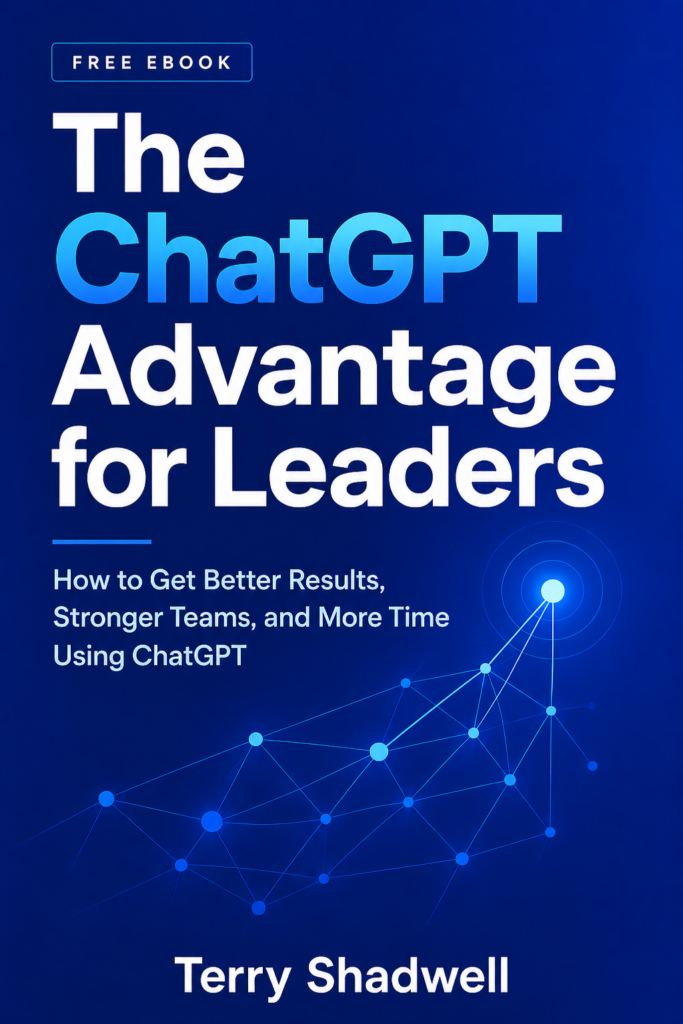
The ChatGPT Advantage for Leaders
Learn how to use ChatGPT for leadership communication, delegation, meetings, planning, and day-to-day decision-making.
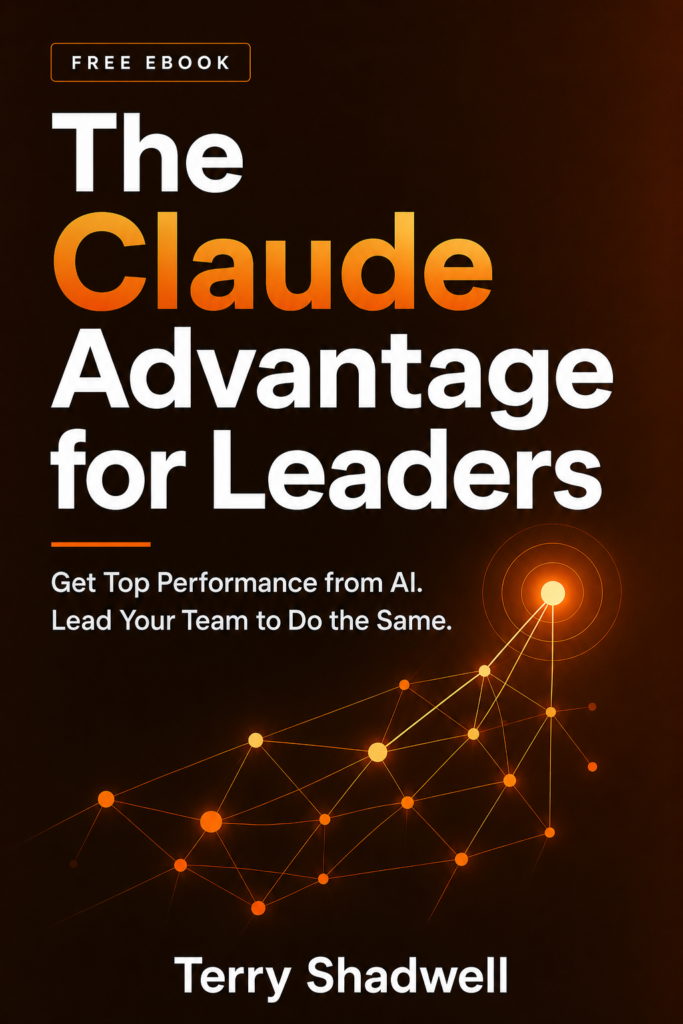
The Claude Advantage for Leaders
Discover how Claude can help leaders improve prompting, think more strategically, and produce clearer, higher-quality written work.
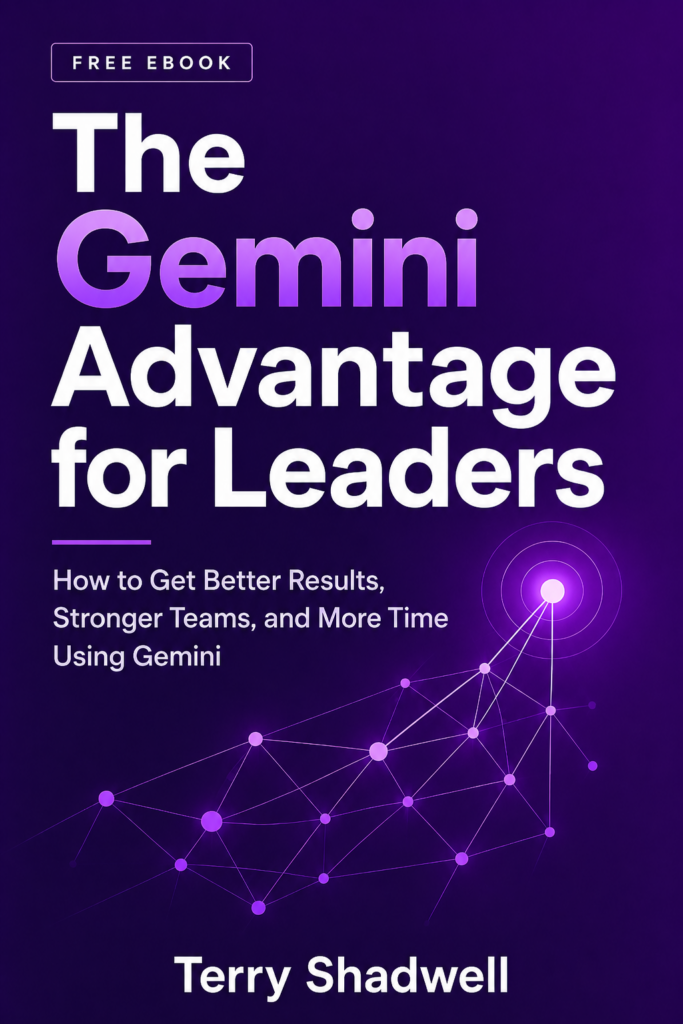
The Gemini Advantage for Leaders
Explore how Gemini can support leaders with connected workflows, stronger AI prompting, and practical workplace problem-solving.
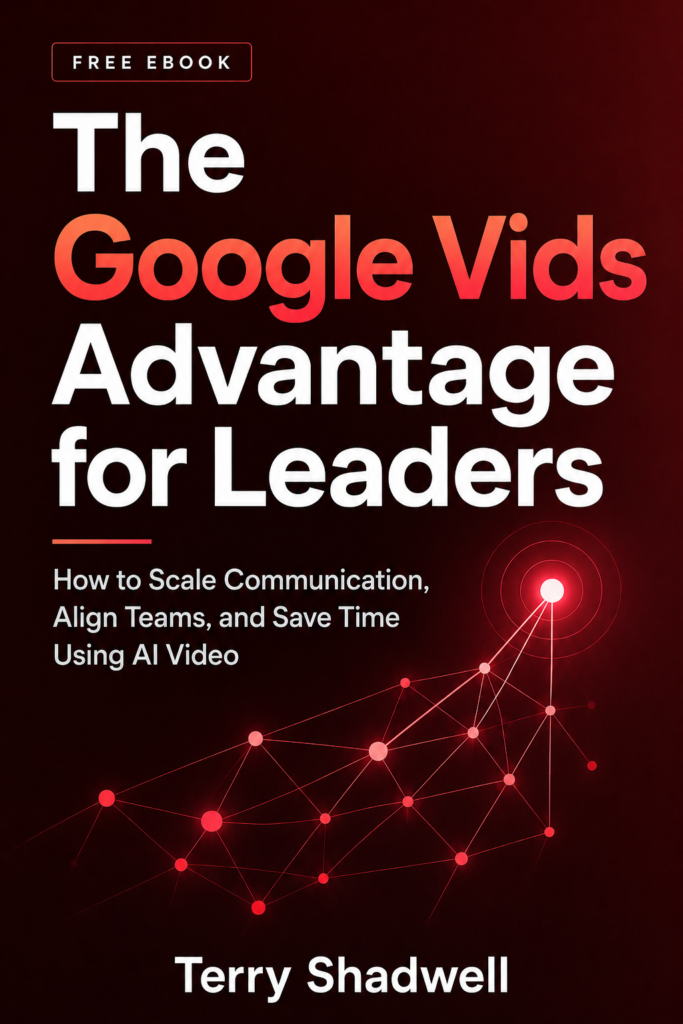
The Google Vids Advantage for Leaders
See how leaders can use AI video to explain ideas clearly, align teams faster, and improve communication at scale.
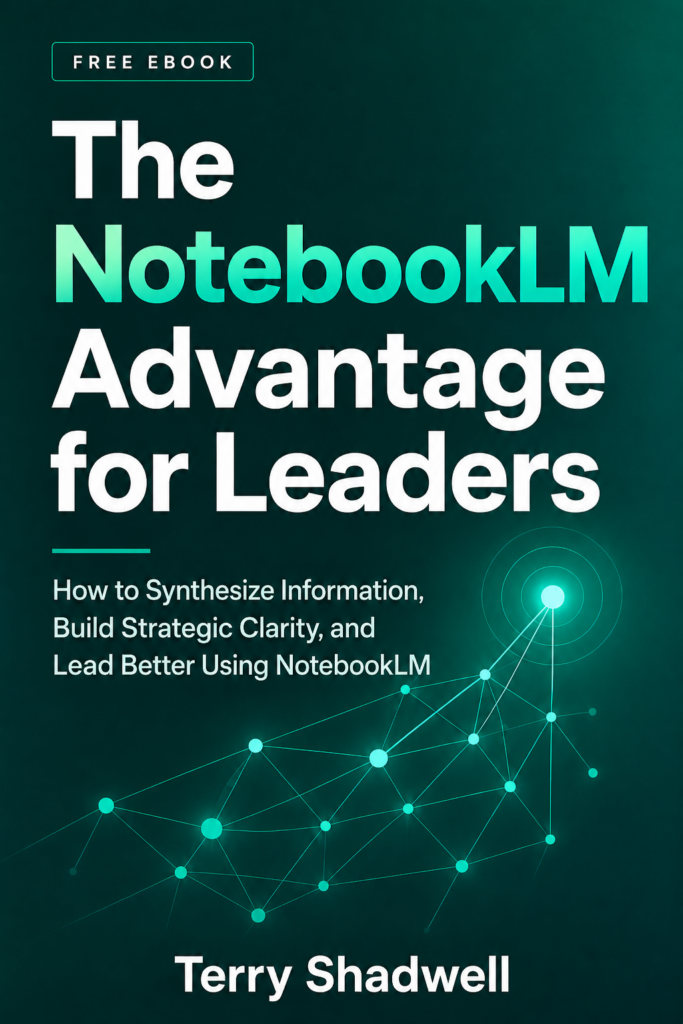
The NotebookLM Advantage for Leaders
Learn how NotebookLM can help leaders organize documents, synthesize information, and turn scattered knowledge into actionable insights.
If you are serious about building discipline, taking control of your time and lifting the quality of your life, join me across my platforms.
🌍 Website: terryshadwell.com
🎥 YouTube: youtube.com/@TerryShadwell-dd9dx
💼 LinkedIn: linkedin.com/in/terry-shadwell-2618a773
📷 Instagram: instagram.com/terryashadwell
✖️ X: x.com/shadwell_t
Terry Shadwell
Start Your Next Level
If you are navigating work pressures, business demands, and the need to manage people and priorities, it starts with strengthening your personal leadership, building real self awareness, and achieving your personal growth goals.
Explore the Invigorating Business Solutions in partnership with Terry Shadwell Leadership collection of best self development books designed to help you take control and move forward with confidence.