
Earlier this month I was in Melbourne for a leadership conference. It’s a non-religious leadership conference, and it’s not open to everyone. Everyone there had worked hard to prove themselves to a coach or mentor before being invited.
I love this conference because the people who attend are all moving forward in life. They’re not there because they have to be. They’re there because they want to become better leaders, better people and have a greater impact on those around them. What also stood out to me was that they all shared two leadership philosophies that I believe create the greatest leaders, and the deepest leadership influence, Moral Authority Leadership and Servant Leadership. Neither one comes from a title. Both are earned through character, consistency and a genuine commitment to helping others grow.
What Is Moral Authority in Leadership?
Moral authority in leadership is authority that is earned through action, not granted by a title or a position on an org chart. A leader with moral authority has already walked the path they are asking others to walk, and people follow because of what they have seen that leader do, not because of the rank they hold.
Moral Authority Leadership comes from walking the path yourself and doing what needs to be done before expecting others to follow. A leader with moral authority doesn’t rely on a job title, position or rank to influence people. Instead, people choose to follow because they’ve seen the leader live the values they talk about, overcome the challenges they ask others to face and show integrity through their actions. They set high standards for themselves and live by those standards before ever asking it of anyone else.
- They live the values they talk about, rather than simply stating them
- They face the same challenges they ask their people to face
- They show integrity consistently, not only when it’s convenient
- They set high standards for themselves first, before asking it of anyone else

Servant Leadership vs Traditional Leadership
The difference between servant leadership vs traditional leadership comes down to one question, who the leadership role actually exists to serve. Traditional, positional leadership centres on the authority of the role. Servant leadership centres on the growth of the people the leader is responsible for.
This is very different from positional leadership. Positional leaders gain authority because of the role they hold within an organisation. Some earn it through genuine experience and performance. Others get there by knowing the right people or simply outlasting everyone else. Either way, holding a position doesn’t automatically make someone a leader. If they lack integrity, empathy or the ability to work with people, they will struggle to inspire others, regardless of the title on their business card.
| Aspect | Traditional / Positional Leadership | Moral Authority and Servant Leadership |
|---|---|---|
| Source of authority | Job title, rank or position | Character, consistency and lived example |
| What earns respect | The role itself | Actions and integrity demonstrated over time |
| Focus | Personal success and control | Growth and success of others |
| Risk if unchecked | Can slide into weak leadership, relying on fear or simple compliance | Builds genuine trust and long-term influence |
| Longevity of impact | Fades when the title changes | Continues long after the role ends |
Why Do Leadership Values Matter More Than Job Titles?
Leadership values matter more than job titles because a title can be given to anyone, but values have to be demonstrated and proven over time. People follow what a leader does far more readily than what a leader is called.
That’s really the question of why leadership values matter more than job titles, and it comes down to trust. A title might open a door, but it won’t keep people walking through it with you. When your leadership values are visible in daily decisions, big and small, people notice long before you ever have to say what you stand for. And when a title isn’t backed by consistent values, teams eventually see through the gap between what a leader says and what a leader actually does.
How Do You Build Leadership Influence Without Authority?
You build leadership influence without authority by consistently living your values, doing the hard things first, and helping others succeed before asking anything for yourself. Influence grows out of demonstrated character, not out of a position on an org chart.
This is really a question about how to build leadership influence without authority, and the answer starts with character rather than confidence or credentials. It shows up in the small, unglamorous moments, keeping a promise when it’s inconvenient, admitting a mistake before being caught out, or doing the unseen work that makes the whole team look good. None of that requires a promotion. All of it builds the kind of trust that no title can buy.
How Do You Become a Person of Character at Work?
You become a person of character at work by aligning your daily actions with your stated values, especially when no one is watching or when it costs you something. Character is not a personality trait, it’s a habit built through repeated choices.
If you are wondering how to become a person of character at work, start with the small decisions nobody else sees, the extra effort you put in when no one is checking, the credit you give away instead of keeping, the hard conversation you have instead of avoiding. Being a person of character means your private choices match your public ones.
- Keep commitments even when it’s inconvenient
- Own your mistakes before being asked to
- Treat people the same whether they can help you or not
- Do the right thing even when no one would notice if you didn’t
Examples of Resilience in Leadership During Career Loss
I have experienced the power of Moral Authority Leadership firsthand. After seventeen years of teaching, a minor incident was blown out of all proportion into what I can only describe as a witch hunt, and I was forced out. Overnight, I lost my career and much of my confidence with it.

How Do You Build Character as a Leader Over Time?
You build character as a leader over time through honest feedback, deliberate reflection and the willingness to keep showing up after a setback. It is rarely one big moment, it’s hundreds of small ones stacked on top of each other.
At one of the lowest points in my life, my coach and mentor didn’t tell me what I wanted to hear. Having faced significant challenges of their own, they helped me see what I couldn’t see in myself. They challenged my thinking and helped me build a practical plan for moving forward. Instead of dwelling on what I had lost, they encouraged me to focus on what I could build. That shift in thinking gave me the confidence to invest fully in my business and keep developing as a leader. They had earned the right to influence me because they had already walked a similar path and they used it to help me grow. That experience taught me exactly how to build character as a leader over time, and it also taught me that the greatest leaders don’t rescue people from adversity. They help people grow through it. Growing your character as a leader rarely happens through big dramatic moments, it happens through hundreds of small ones.
How Do You Identify a Good Mentor at Work and in Business?
The characteristics of a good mentor include someone who has walked a similar path, tells you the truth even when it’s uncomfortable, and helps you build a plan rather than simply offering sympathy. A good mentor challenges your thinking instead of just agreeing with you.
Based on what I experienced firsthand, the same characteristics of a good mentor show up again and again in the people who genuinely help others grow.
- They have faced significant challenges of their own
- They tell you what you need to hear, not just what you want to hear
- They help you see what you can’t see in yourself
- They challenge your thinking rather than simply agreeing with you
- They help you build a practical plan, not just offer sympathy
How Does Servant Leadership Build Confidence in Leadership?
Servant leadership builds confidence in leadership by shifting decisions and ownership back to the people being led, rather than keeping all the answers with the leader. When people are trusted to decide, they develop the confidence to keep deciding well.
Servant Leadership is built on a simple idea. The leader exists to help others grow. Instead of asking, “How can my team help me succeed?”, a servant leader asks, “How can I help my team succeed?” They invest their time and energy in developing the people around them, coaching and challenging them until they become more capable and more confident. Their success is measured not by how much power they have, but by how many people they help reach their potential.
I’ve also had the privilege of applying this philosophy in my own work. One business owner I worked with had all the technical knowledge needed to succeed, but lacked the confidence to back themselves. Every decision, every opportunity, was met with doubt. They were always looking for someone else to confirm they were doing the right thing.
Rather than making decisions for them, my role was to help them develop the confidence to make those decisions themselves. We worked on changing the way they viewed their abilities, challenged the beliefs that were holding them back and focused on the evidence of what they had already achieved. Over time, they stopped looking for permission. They trusted their own judgement, and they led their business with real decisiveness. Every decision they made without needing outside validation is a story about confidence in leadership built through evidence, not encouragement.
That, to me, is the essence of Servant Leadership. It isn’t about creating people who depend on you. It’s about helping people become strong enough that they no longer need you. The greatest reward as a leader is seeing someone you have mentored stand on their own, make confident decisions and begin helping others in the same way.
What Happens When Weak Leadership Takes Hold?
Weak leadership shows up as indecision, inconsistency and a reliance on title instead of trust. It erodes confidence in a team faster than almost anything else, because people stop believing the leader will back them up.
Ultimately this shows how weak leadership affects team performance, from slower decisions and lower trust to higher turnover and quiet disengagement. Gallup’s research consistently links poor management to weaker team engagement and performance outcomes (source, rel=”nofollow”). The pattern is simple. When leaders rely on position instead of character, teams stop bringing their best.
| Signs of a Good Mentor or Leader | Signs of Weak Leadership |
|---|---|
| Tells you the truth, even when it’s uncomfortable | Avoids hard conversations to keep the peace |
| Helps you build a plan and take ownership | Makes every decision for the team, creating dependence |
| Leads by example, first and consistently | Relies on title or rank to get compliance |
| Measures success by the growth of others | Measures success by personal control or credit |

How Do Moral Authority and Servant Leadership Combine to Build Leadership Influence?
For me, these two leadership philosophies go hand in hand. A leader who has earned moral authority has the credibility to influence others because they have already walked the path. A servant leader then uses that credibility to invest in others and help them achieve what they once achieved themselves. When you combine the two, you don’t just create better leaders. You create people who leave others stronger than they found them.
As I sat in that conference room earlier this month, I realised that the people who had earned the right to be there all shared these two leadership philosophies. They weren’t trying to prove how important they were or collect another title. They had earned the respect of others by the way they lived their lives, and they used it to help others grow.
It reminded me that authority was never the point. Leadership influence was. It can’t be given through a promotion or written on a business card. It’s earned through your character and your willingness to invest in others.
If we want to create better businesses, stronger communities and a better future, we need more people who earn influence through their character and use that influence to help others grow. In my experience, they are the people we remember, the people we willingly follow and the people who leave the greatest legacy.
Still Wondering How Do You Find the Time?
Whether you’re leading a team or getting your own work done, you’re juggling deadlines, competing priorities, and demands that never let up. The Discipline of Time gives you a practical system to cut through perfectionism and procrastination, take back your focus, and get through your day with less stress, so you stop reacting to your to-do list and start running it. Every day you put it off is another day of urgent tasks crowding out the goals that actually move you forward.
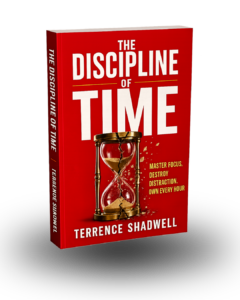
If you are serious about building discipline, taking control of your time and lifting the quality of your life, join me across my platforms.
🌍 Website: terryshadwell.com
🎥 YouTube: youtube.com/@TerryShadwell-dd9dx
💼 LinkedIn: linkedin.com/in/terry-shadwell-2618a773
📷 Instagram: instagram.com/terryashadwell
✖️ X: x.com/shadwell_t
Terry Shadwell
Start Your Next Level
If you are navigating work pressures, business demands, and the need to manage people and priorities, it starts with strengthening your personal leadership, building real self awareness, and achieving your personal growth goals.
Explore Terry Shadwell’s collection of best self development books designed to help you take control and move forward with confidence.